At Acytronix, we are committed to advancing extracellular vesicle (EV) research by providing innovative solutions for rapid purification and analysis. In collaboration with Wyatt Technology, we have developed a streamlined workflow that enables the purification and characterization of EVs in under 10 minutes. Our portable microstructured electrochemical device (PMED), when paired with Wyatt’s DynaPro™ NanoStar™ or ZetaStar™ instruments, offers an efficient and non-destructive approach to EV analysis.
The Importance of Extracellular Vesicles (EVs) in Research
Extracellular vesicles are secreted by most cell types and play a vital role in intercellular communication by transporting proteins, lipids, and nucleic acids. These vesicles have significant diagnostic potential, serving as non-invasive biomarkers for diseases such as cancer, neurodegenerative disorders, and cardiovascular conditions. However, the conventional purification of EVs from physiological fluids such as urine, plasma, serum, milk, and cell culture medium remains challenging. Traditional methods often involve multiple steps, require specialized equipment, and demand skilled operators, leading to low yield, reduced purity, and compromised sample integrity.
Beyond purification, the analysis of EVs poses additional challenges, particularly when dealing with limited biological samples. Plasma samples, for example, are often scarce and irreplaceable. Existing quantification and characterization techniques consume significant amounts of these valuable samples, further restricting their availability for downstream applications.
Acytronix PMED and DynaPro NanoStar™: A Complete Workflow
To address these challenges, Acytronix has developed the PMED, a cutting-edge device designed for the rapid and efficient purification of EVs from physiological fluids. When used in combination with Wyatt Technology’s DynaPro NanoStar DLS instrument, researchers can achieve EV capture, release, and non-destructive characterization in under 10 minutes.
EVs Purification and Analysis Workflow
- EV Capture: The sample, such as plasma, is injected into the PMED separating cartridge, where targeted antibodies capture specific EV subtypes.
- Quick Rinse & Release: The cartridge is briefly rinsed, and an electrical current triggers the release of EVs directly into a buffer or water.
- Non-Destructive Analysis: The purified EVs are transferred into a cuvette for rapid size and distribution measurements using the DynaPro NanoStar DLS instrument.

Advantages of the Acytronix PMED with Wyatt’s DynaPro NanoStar™
- Targeted Purification: The PMED device uses antibody-based capture (Anti-CD9 for general EVs, Anti-CD63 for exosome-related EVs, and Anti-CD73 for regenerative EVs), ensuring specificity.
- Electric Current-Induced Release: A unique mechanism enables EVs to be released directly into the desired buffer, eliminating lengthy buffer exchange steps.
- Minimal Sample Consumption: The DynaPro NanoStar requires as little as 2 µL for measurements, preserving valuable biological samples for further analysis.
- User-Friendly & Fast: The DynaPro NanoStar features intuitive touchscreen operation with the DYNAMICS™ Touch™ software, enabling walk-up measurements with results in less than 30 seconds.
- Broad Biofluid Compatibility: The workflow is optimized for various biofluids, making it a versatile tool for biological and medical research.


By integrating our PMED technology with Wyatt Technology’s state-of-the-art DLS instruments, Acytronix is revolutionizing the field of EV purification and analysis. Researchers can now obtain high-quality EVs and precise characterization in a fraction of the time required by conventional methods. This groundbreaking approach not only accelerates research but also enhances the reliability and reproducibility of EV-based studies.
For a demonstration of this complete workflow using the DynaPro NanoStar, visit: link
From PMED to M-PMED: Scaling EV Isolation for High-Throughput Applications
The PMED platform established a rapid and selective approach for the isolation and release of extracellular vesicles (EVs) from biological samples. While the PMED workflow enables efficient processing and analysis of individual samples, high-throughput research applications require the same level of purification performance at a substantially larger scale.
To address this need, Acytronix developed the M-PMED, an evolution of the PMED platform designed specifically for parallel sample processing. The M-PMED extends the core principles of PMED—selective immunoaffinity capture, controlled electrical release, and minimal sample handling—to enable researchers to process significantly larger numbers of samples within a working day.
High-Throughput EV Isolation with M-PMED
The M-PMED is designed for the rapid isolation of extracellular vesicles, exosomes, and other nanometric biological entities from a broad range of biological fluids, including urine, saliva, plasma, milk, and cell culture media.
By enabling multiple samples to be processed in parallel, the M-PMED addresses a key limitation of conventional EV isolation workflows: the time and labor required to process large sample cohorts individually. Depending on the sample type and workflow, purification can be completed in approximately 10–30 minutes, while parallel processing enables throughput of up to 100 samples per day.
The system requires only a magnetic stirrer plate and the M-PMED components, eliminating the need for ultracentrifugation and reducing the dependence on large, complex laboratory equipment.
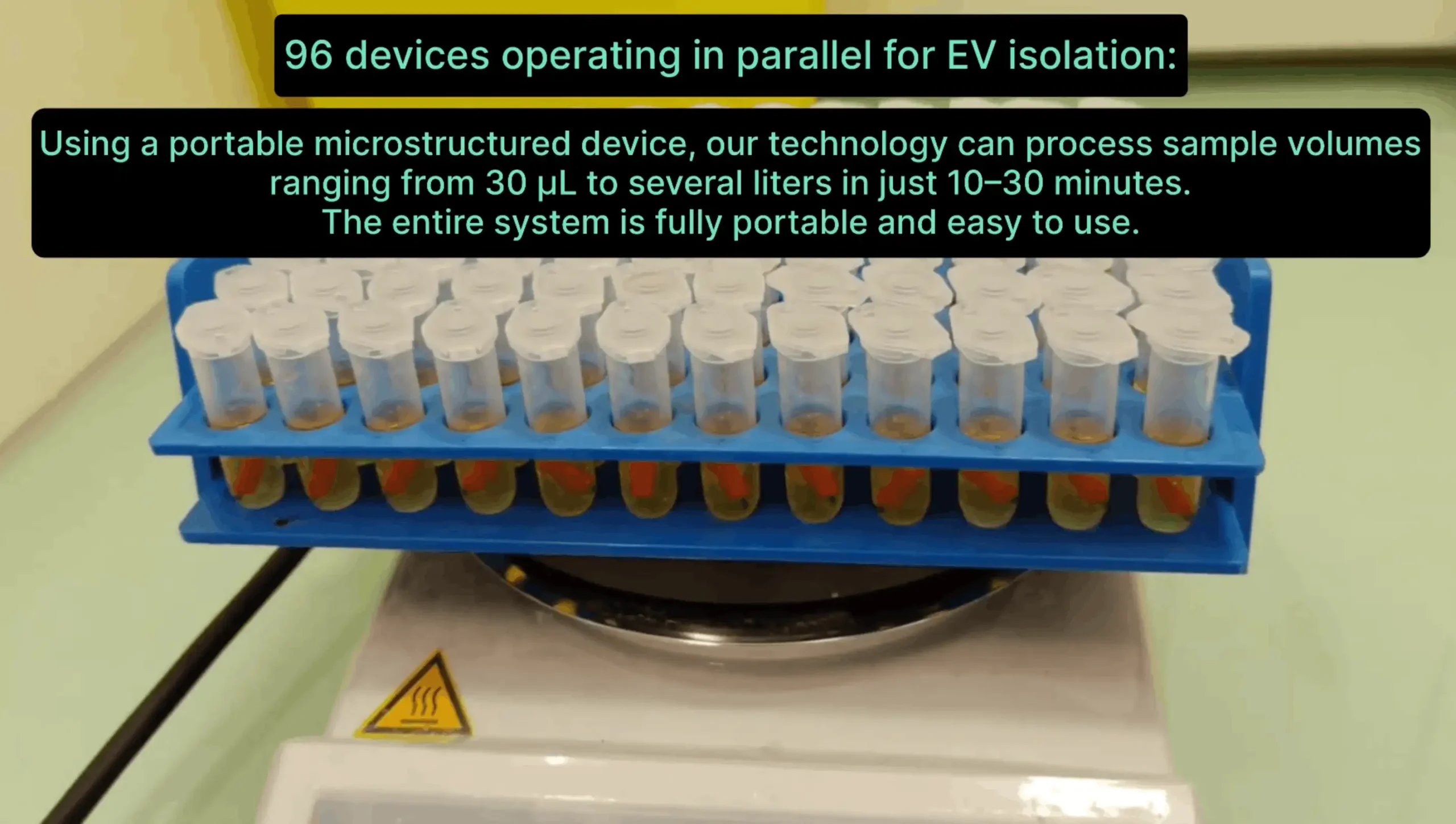
Parallel Processing for Research-Scale Sample Cohorts
The M-PMED is particularly suited to applications where samples from multiple patients, experimental conditions, or time points must be processed using a consistent workflow.
Parallel processing allows researchers to maintain a standardized purification procedure across a large sample cohort while reducing hands-on processing time. This is especially valuable when working with limited or precious biological samples, where efficient sample handling and reproducibility are critical.
The platform can be adapted to different biofluids and EV subpopulations through marker-specific immunoaffinity capture, allowing researchers to tailor the isolation process to their specific research objectives.
Marker-Specific EV Isolation
The M-PMED uses antibody-based capture to selectively isolate defined EV populations or other nanometric biological entities.
- Anti-CD9: General extracellular vesicle isolation
- Anti-CD63: Isolation of exosome-related EV populations
- Anti-CD73: Isolation of regenerative EV subpopulations
- Customizable separation: Adaptation to other biological targets and nanometric entities in the approximately 30–1000 nm range
This marker-specific approach enables researchers to select the population of interest rather than relying solely on size-based or non-specific precipitation methods.
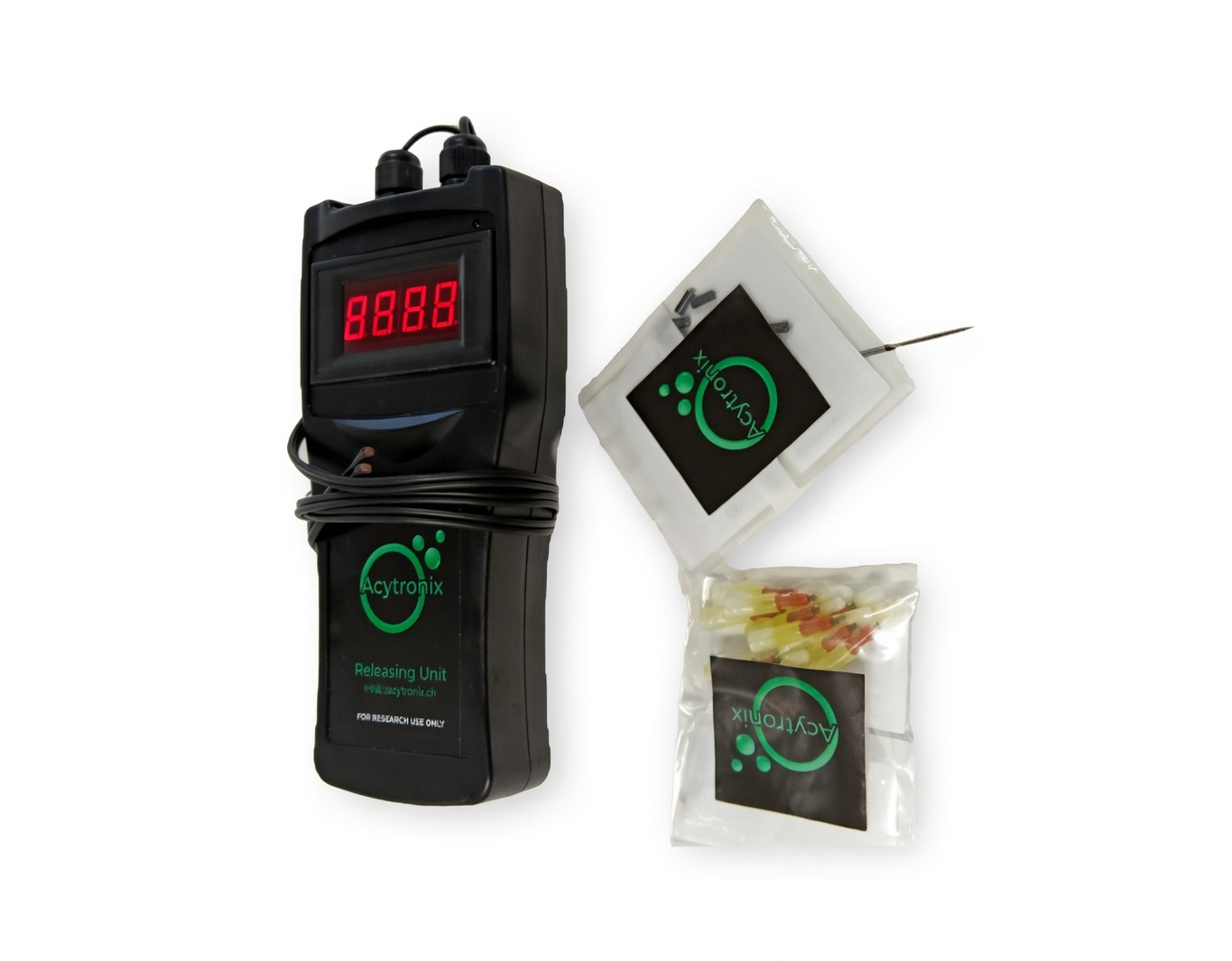
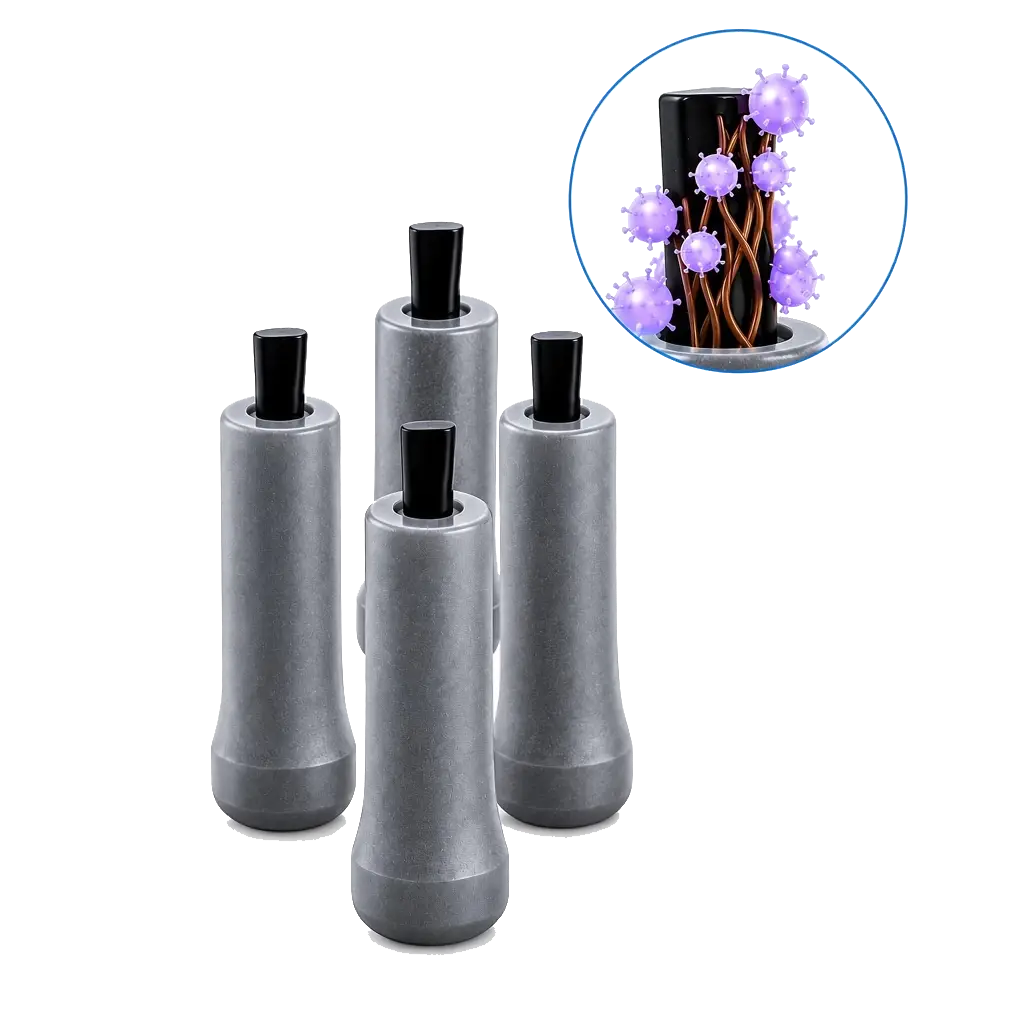
M-PMED Separating Magnetic Cartridge & Releasing Unit
The M-PMED workflow consists of two key components: the M-PMED Separating Magnetic Cartridge and the Releasing Unit.
The magnetic cartridge enables efficient immunoaffinity-based capture during magnetic processing. Following capture and washing, the Releasing Unit applies a controlled electrical stimulus to release the purified biological material into the desired collection buffer.
This separation of the capture and release stages provides controlled handling of the isolated material while maintaining the rapid workflow that characterizes the PMED platform.
M-PMED Kit Components
The M-PMED Separating Magnetic Cartridge & Releasing Unit Kit includes:
- 1 × M-PMED Releasing Unit
- M-PMED Separating Magnetic Cartridge
Additional cartridges can be used to support parallel processing and scale the workflow according to the number of samples being processed.
From Rapid Isolation to Scalable EV Research
The development of M-PMED represents the next step in the evolution of Acytronix’s EV isolation technology. While PMED provides a rapid and selective solution for individual sample purification and downstream characterization, M-PMED extends the same underlying technology to larger sample cohorts and higher-throughput research workflows.
By combining selective immunoaffinity capture, controlled electrical release, minimal sample handling, and parallel processing, M-PMED provides researchers with a practical approach for scaling EV isolation without introducing the complexity associated with conventional ultracentrifugation-based workflows.
For laboratories working with large numbers of biological samples, M-PMED offers a streamlined path from sample preparation to purified EVs, helping reduce processing time and supporting more consistent, scalable EV research.